- A failing garage or shed that made it through summer is a different risk once snow starts sitting on the roof.
- Price comes down to size, what it is sitting on, what is inside it, and how easy it is to reach.
- The biggest decision is usually the slab: leave it for a new structure, or take it out and get the yard back.
Snow Load Is The Deadline
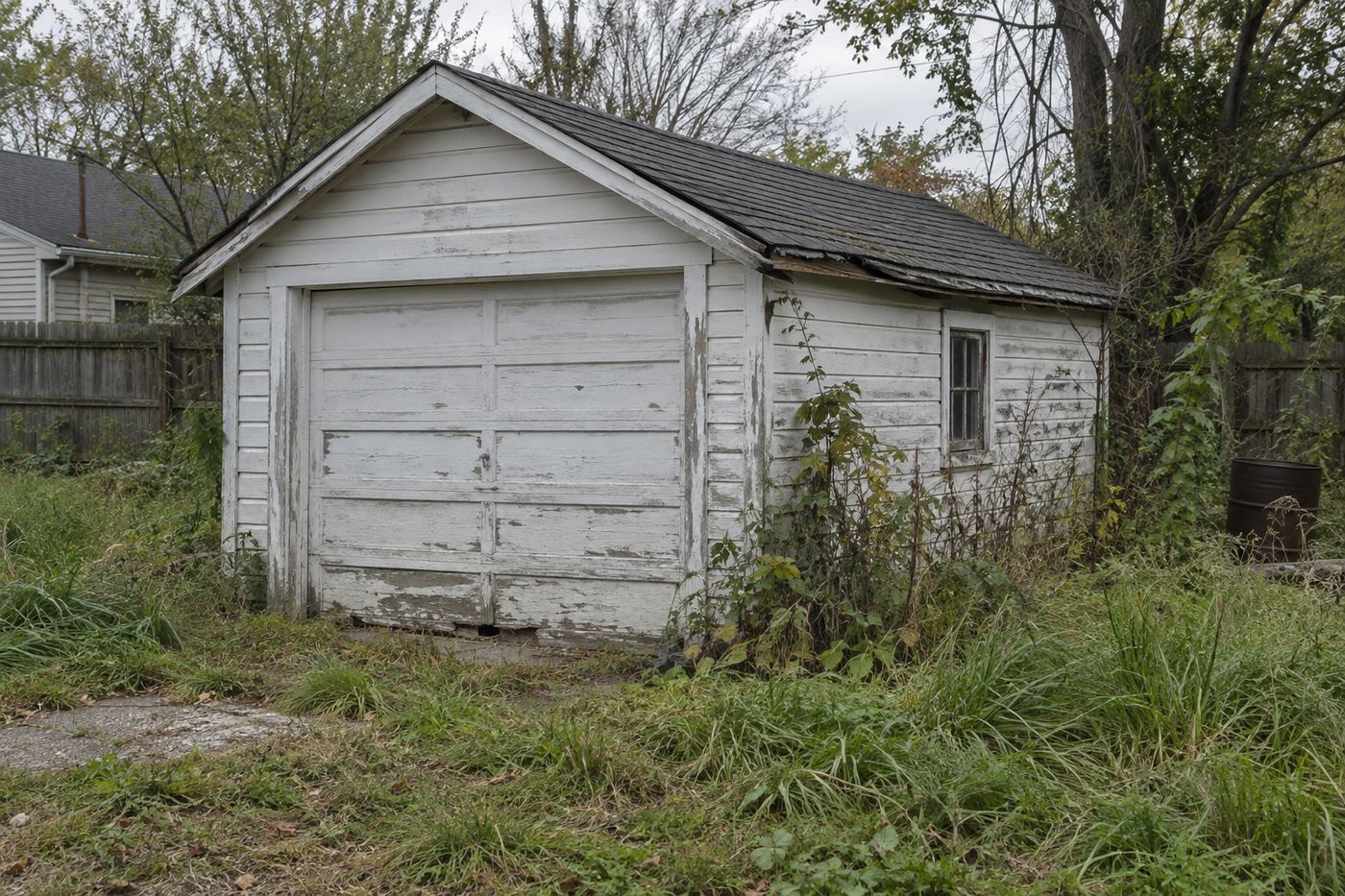
Old detached garages and sheds tend to fail slowly and then all at once. Rot at the sill, a roofline that has started to dip, rafters that were never built for much weight in the first place. Through the summer none of that matters much.
Winter changes the load. Heavy, wet snow sitting on a roof that is already sagging is exactly how an outbuilding ends up collapsing onto whatever is stored inside it, or onto a fence, or onto the neighbor's side of the line.
Taking it down in the fall is simpler, cheaper, and safer than dealing with it after a collapse, when the debris is tangled, the contents are damaged, and the work has become an emergency job instead of a planned one.
What Actually Drives The Price
Size is the obvious one, but it is rarely the biggest factor. A small shed on a gravel base with nothing inside is a quick job. The same size building on a thick slab, full of stored equipment, at the back of a yard with no vehicle access, is a very different one.
Access matters more than most people expect. If equipment can drive straight to the structure, the work is fast. If everything has to come out by hand through a side gate, the labor goes up accordingly.
Contents are the other big variable. A garage packed with decades of storage is really two jobs: a cleanout, then a demolition. Doing the cleanout as its own step keeps household items out of the structural debris and keeps disposal simple.
The Slab Question
Most detached garages sit on a concrete slab, and the decision about what happens to it is worth making up front rather than on the day.
If you are replacing the structure with a new garage or shed of a similar footprint, and the slab is sound, leaving it can save real money. If the slab is cracked, heaved, or you want the yard back for lawn, a patio, or a garden, it should come out, and the area should be graded so it drains properly.
We will look at it when we walk the property and tell you honestly whether it is worth keeping. A slab that looks fine from above is sometimes cracked straight through underneath.