- There are two ways to get rid of an in ground pool, and they are not variations on the same job.
- A partial fill is faster and cheaper. A full removal costs more and leaves you with a lot that behaves like ordinary ground.
- The right answer usually depends on whether you plan to sell, and what you want to put on top of it.
What A Partial Fill Actually Is
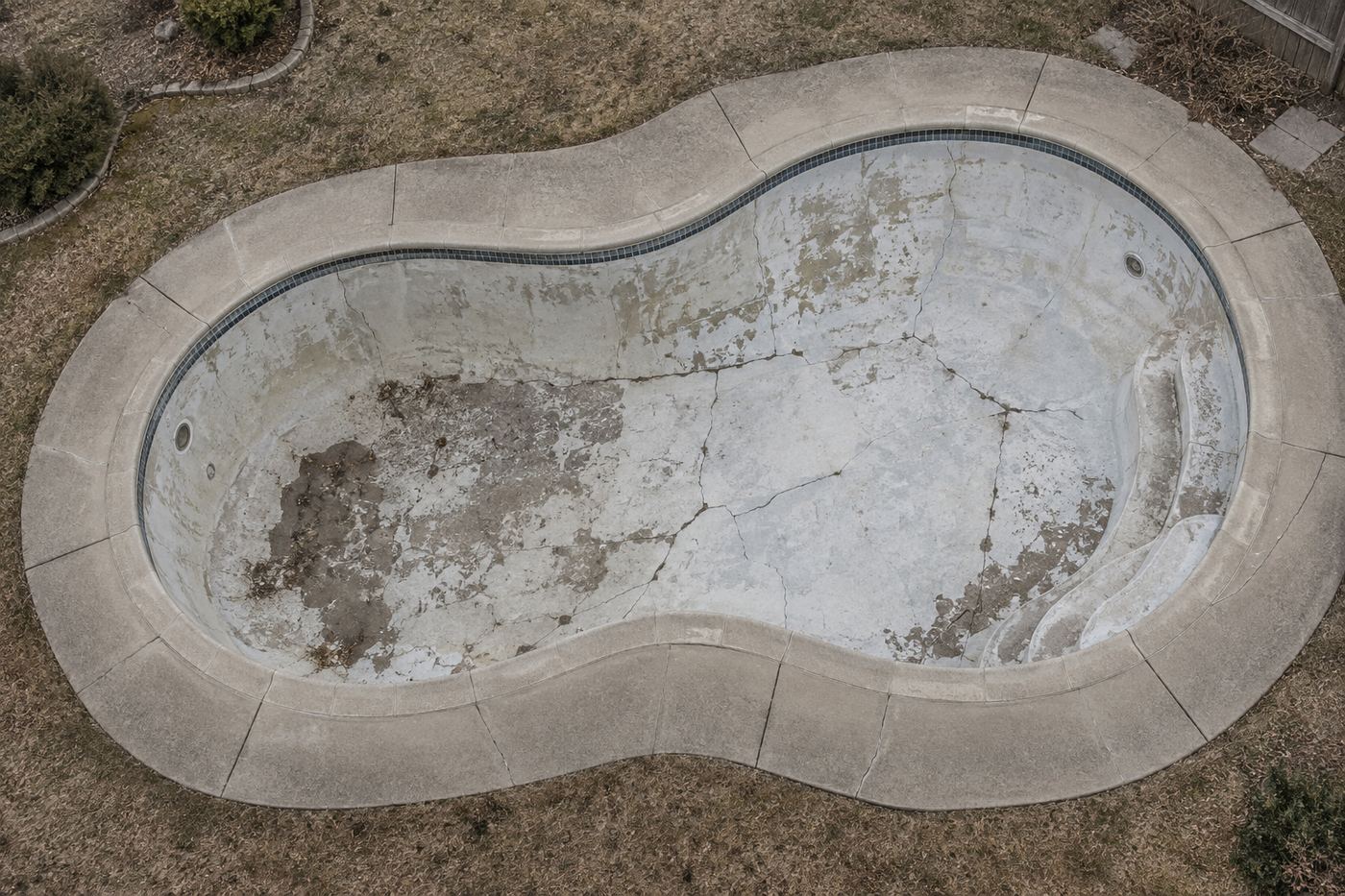
In a partial fill, the top of the pool wall gets broken down below grade, holes get punched through the bottom so water can drain rather than collect, and the shell that remains gets filled in and topped with soil.
It is legitimate work when it is done correctly, and it is the cheaper of the two options by a meaningful margin. The pool stops being a pool, the yard goes back to being a yard, and from the surface you would not know anything was there.
What you should understand is that the shell is still in the ground. Most of the concrete and steel stays where it is, under a few feet of fill. That has consequences, and they show up years later rather than on the day.
What Full Removal Means
Full removal means the entire shell comes out. Concrete gets broken up and hauled, steel and plumbing come out with it, and the hole gets backfilled with clean soil compacted in lifts rather than dumped in one go.
It takes longer, it costs more, and it produces a lot more material to haul away, which is most of the price difference. What you get for it is ground that behaves like ground: no buried structure, no long term settling risk from a shell collapsing, and no restriction on what you build over it later.
If there is any chance you will put a structure, an addition, a garage, or a pad over that footprint, this is the version you want. Building over a partially filled pool is a problem you cannot solve without digging it back up.
The Question That Usually Decides It
If you are staying in the house indefinitely and just want the yard back, a properly executed partial fill is a reasonable, cost effective choice.
If you might sell, the calculation changes. A buried pool shell is generally something that has to be disclosed to a buyer, and disclosure invites questions: how was it filled, was it compacted, is there documentation. Some buyers do not care. Some walk. Some lenders and appraisers ask about it. None of that is fatal, but it is friction at exactly the moment you do not want friction.
Rules on disclosure vary and they change, so confirm the current requirement with your real estate agent or attorney rather than taking a contractor's word for it, ours included. What we can tell you is what is actually in the ground when we finish, and we will put that in writing either way.