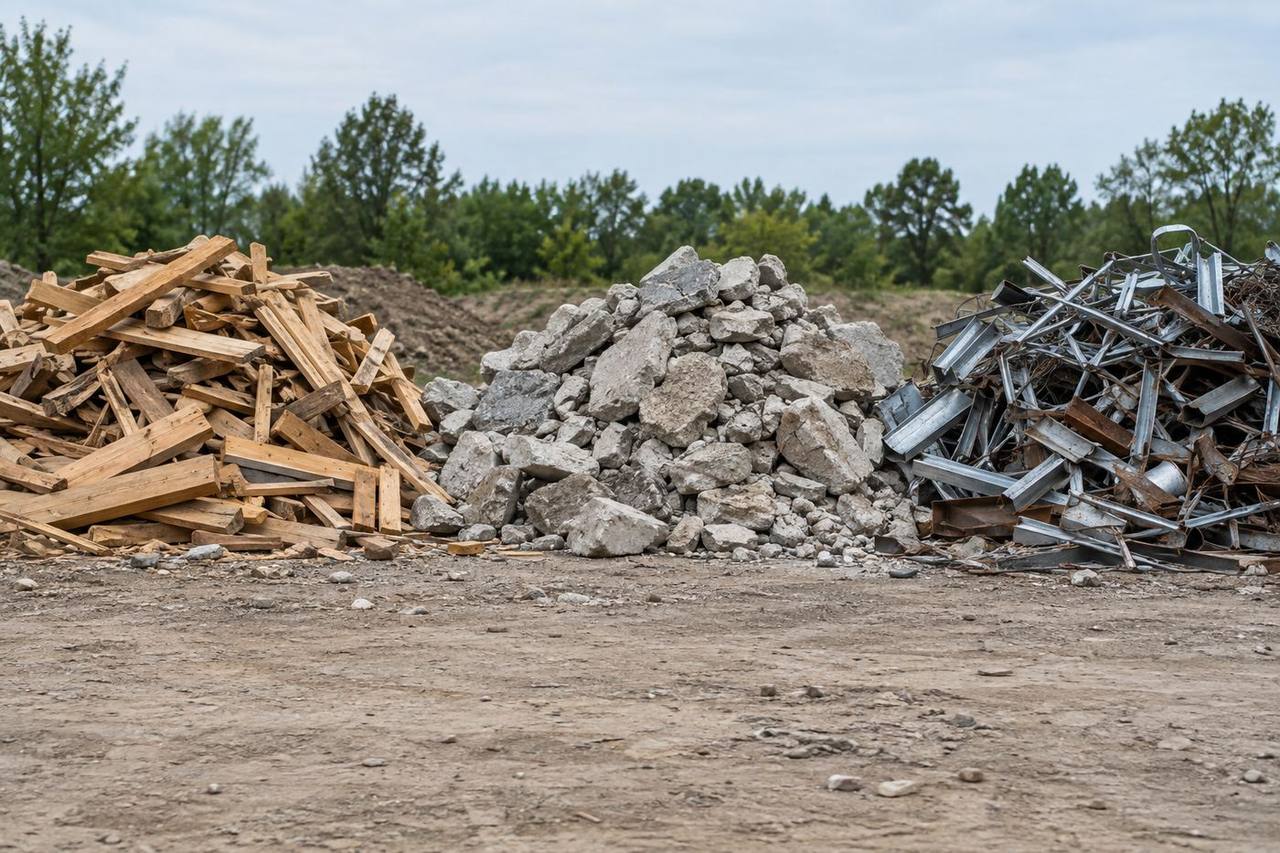
- A house does not leave a job site as one pile. It leaves as separate streams: wood, concrete and masonry, metal, and mixed debris.
- Each stream goes somewhere different, and some of them are worth more sorted than mixed.
- Sorting during the teardown, not after, is a big part of why cleanup can be included in the price.
One House, Several Piles
From the street, a teardown looks like one big pile. On a well run job it is several. As the structure comes down, material gets separated into a few main streams: wood and framing, concrete and masonry, metal, and everything that does not fit cleanly into one of those.
That sorting happens as the work runs, while the machine is already handling each piece. Trying to separate a finished, mixed pile is slower and more expensive than keeping the streams apart from the start.
Where Each Stream Ends Up
Concrete and masonry are heavy and dense, and clean loads are often taken by facilities that crush them into aggregate for reuse. Keeping them free of wood and trash is what makes that possible.
Metal has scrap value. Steel, aluminum, copper, and old appliances get pulled out and kept separate rather than buried in a debris load.
Wood and framing make up the bulk of a typical house teardown. Depending on condition and what it is mixed with, it goes out as its own load or as part of mixed construction debris.
Mixed debris is everything else: drywall, roofing, insulation, flooring, and the materials that are not practical to separate. It is the most expensive stream to dispose of by weight, which is exactly why you want it to be as small as possible.
Why It Matters To You
Disposal is a real part of what a demolition costs, and how the debris is handled moves that number. Sorted loads cost less to get rid of than mixed ones, and dense material like concrete is priced very differently from bulky material like framing.
That is a big part of how a contractor can include hauling and cleanup in the quote instead of adding a disposal line at the end. When you compare quotes, ask what happens to the debris and whether hauling is included. A low number that leaves you with a dumpster bill is not actually low.