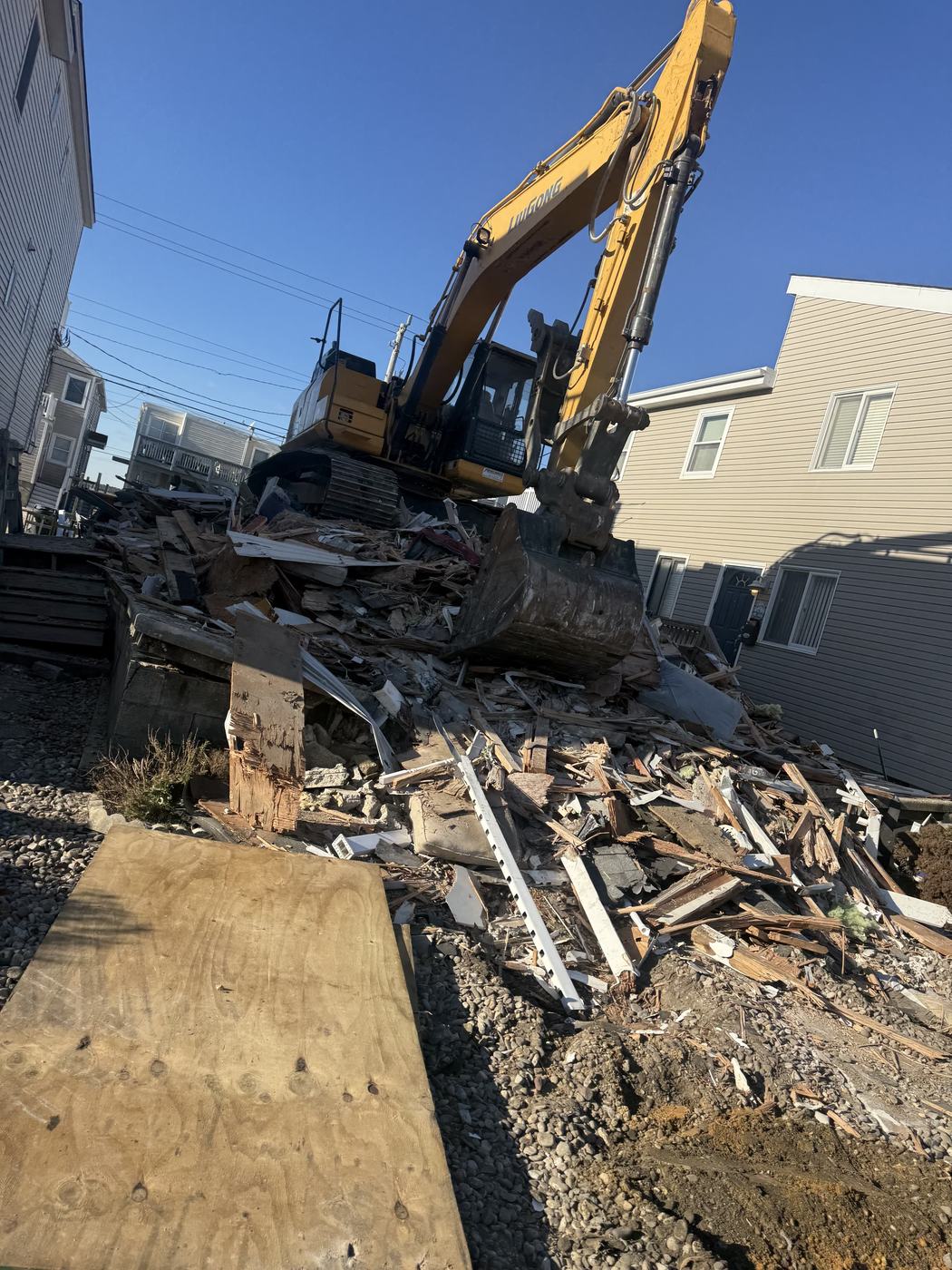
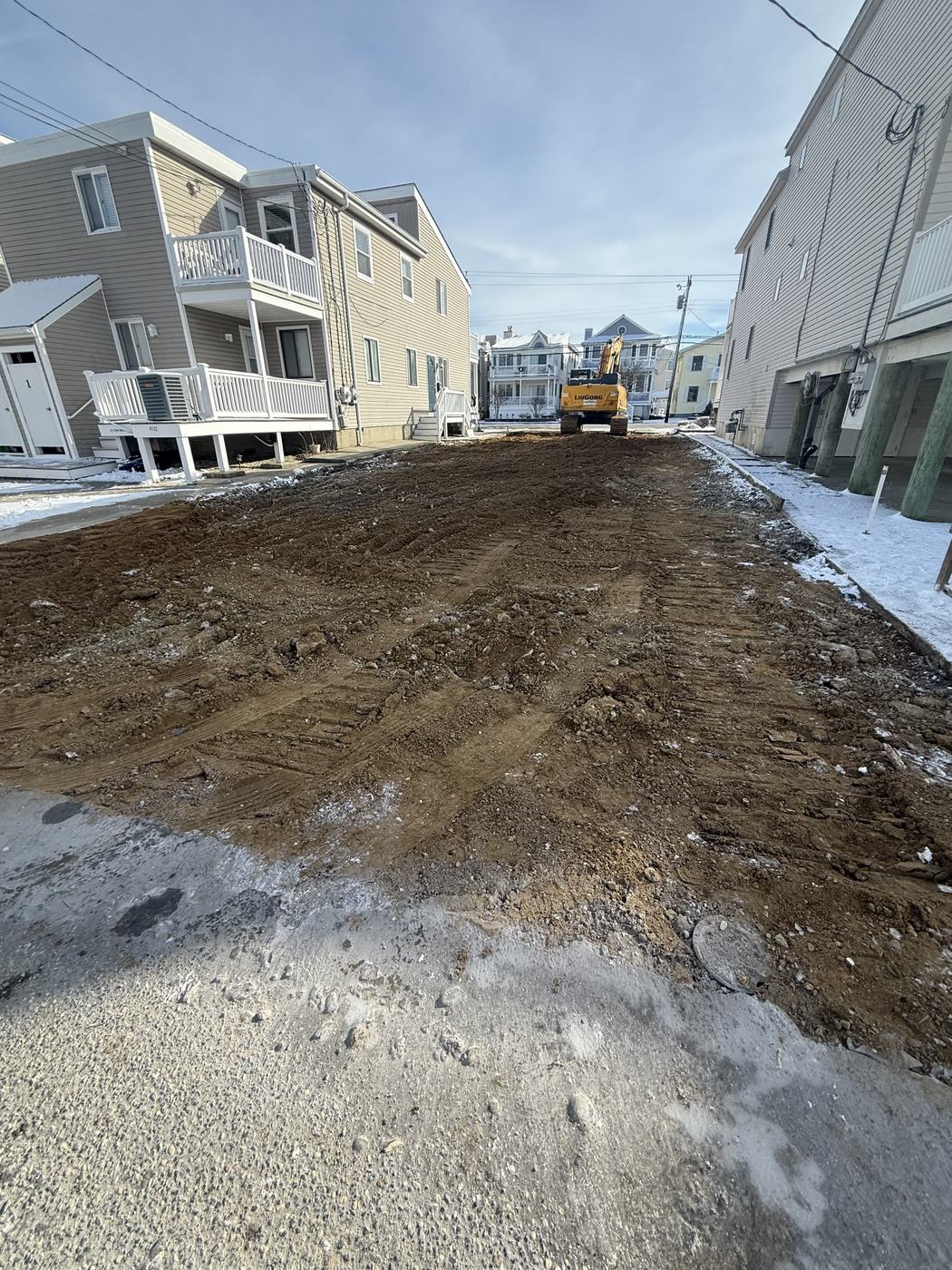
- A two story shore home came down on a narrow Ocean City lot with houses close on both sides and a public sidewalk at the front step.
- On a lot this tight the sequence matters more than the machine: work top down, pull material onto the home's own footprint, keep the street clean the whole way.
- Whole house teardowns across Ocean County and the shore. Call (609) 290-3565 for a free estimate.
The Lot Decides The Plan
Row lots at the shore leave no margin. On this one the neighbors sat within a few feet on either side, the front steps met a public sidewalk, and there was no side yard to stage anything. Before a machine touched the structure, the questions were already answered: where the excavator sits, which way material falls, where debris stacks, and how the sidewalk stays walkable while the work runs.
That planning is most of the job. A teardown on an open lot is a machine and a plan for the debris. A teardown here is a machine, a plan for the debris, and a plan for everything you are not allowed to touch.
Top Down, Not Sideways
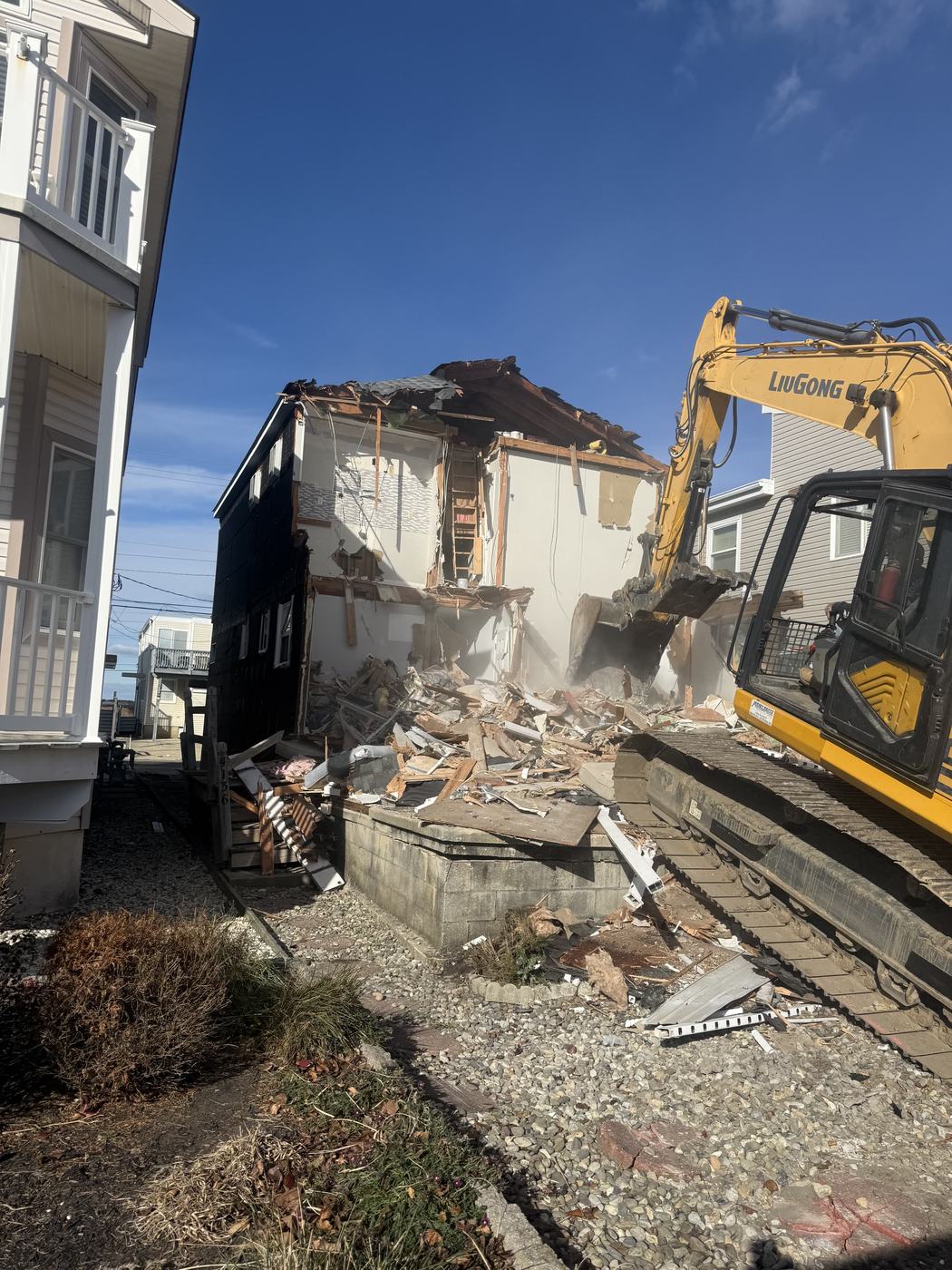
The roof comes off first, then the second story, then the frame. Taking a house down from the top lets the operator control where every piece lands. Push a wall instead and you have given up that control on a lot where there is nowhere for it to go.
The claw pulls material inward and drops it onto the home's own slab. That keeps the debris pile inside the property line, keeps it reachable for loading, and keeps it off the neighbor's siding. It is slower to watch than a wall going over. It is the reason the houses on either side finished the week the way they started it.
Debris, Then Dirt
Once the structure is down, the job turns into a sorting and hauling operation. Framing lumber, siding, roofing, and interior finish all stack on the footprint, get loaded out, and leave. Underneath it is the slab and the foundation, and those come out too. A teardown that leaves concrete in the ground is not finished, it is paused.
Appliances, furniture, and anything left inside get pulled before demolition starts rather than mixed into the pile. It is cleaner, it is cheaper to dispose of correctly, and it keeps the debris stream simple.