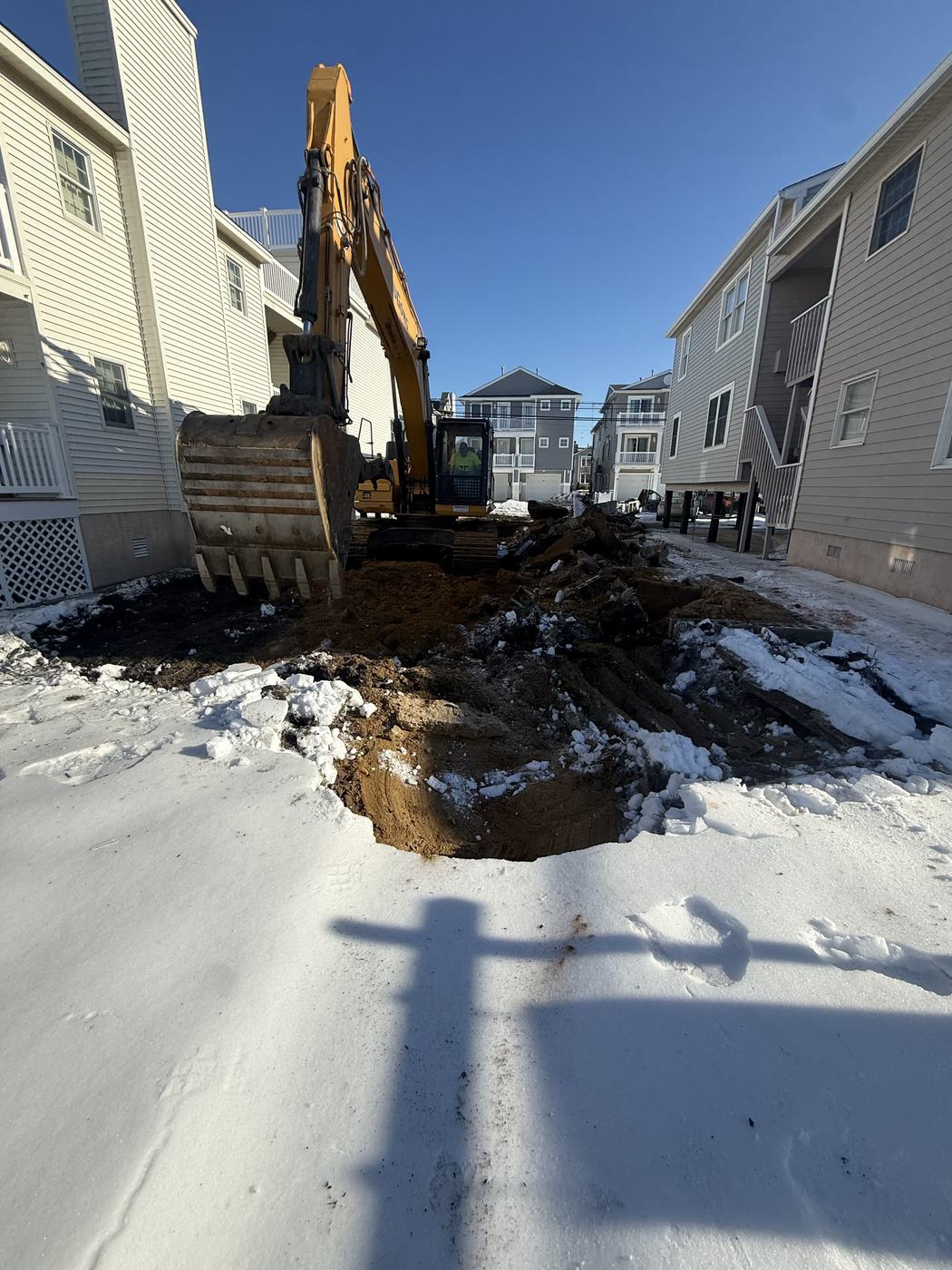
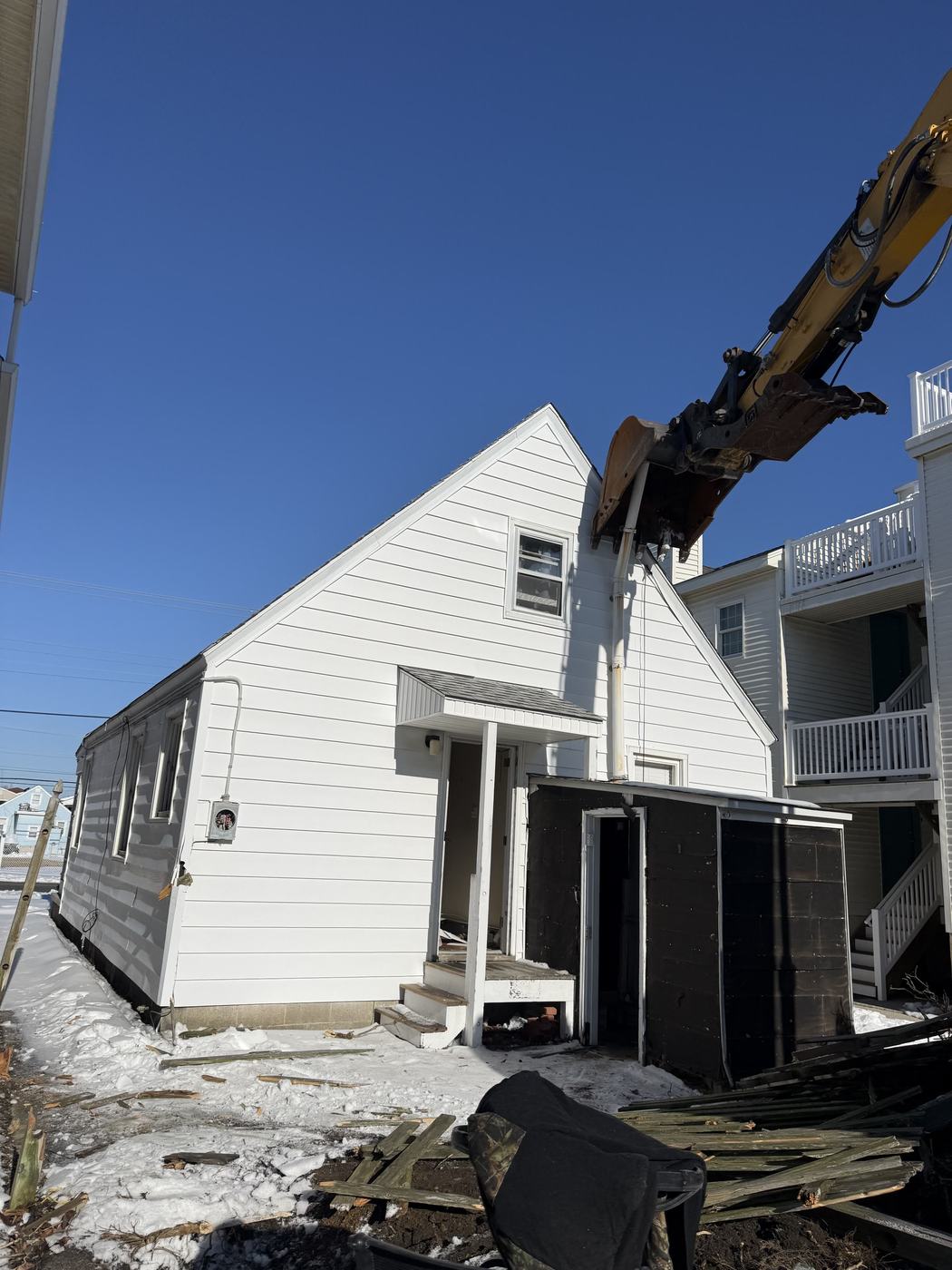
- A single story cape came down in Ocean City in the middle of winter, with snow on the ground and an occupied home a few feet off each property line.
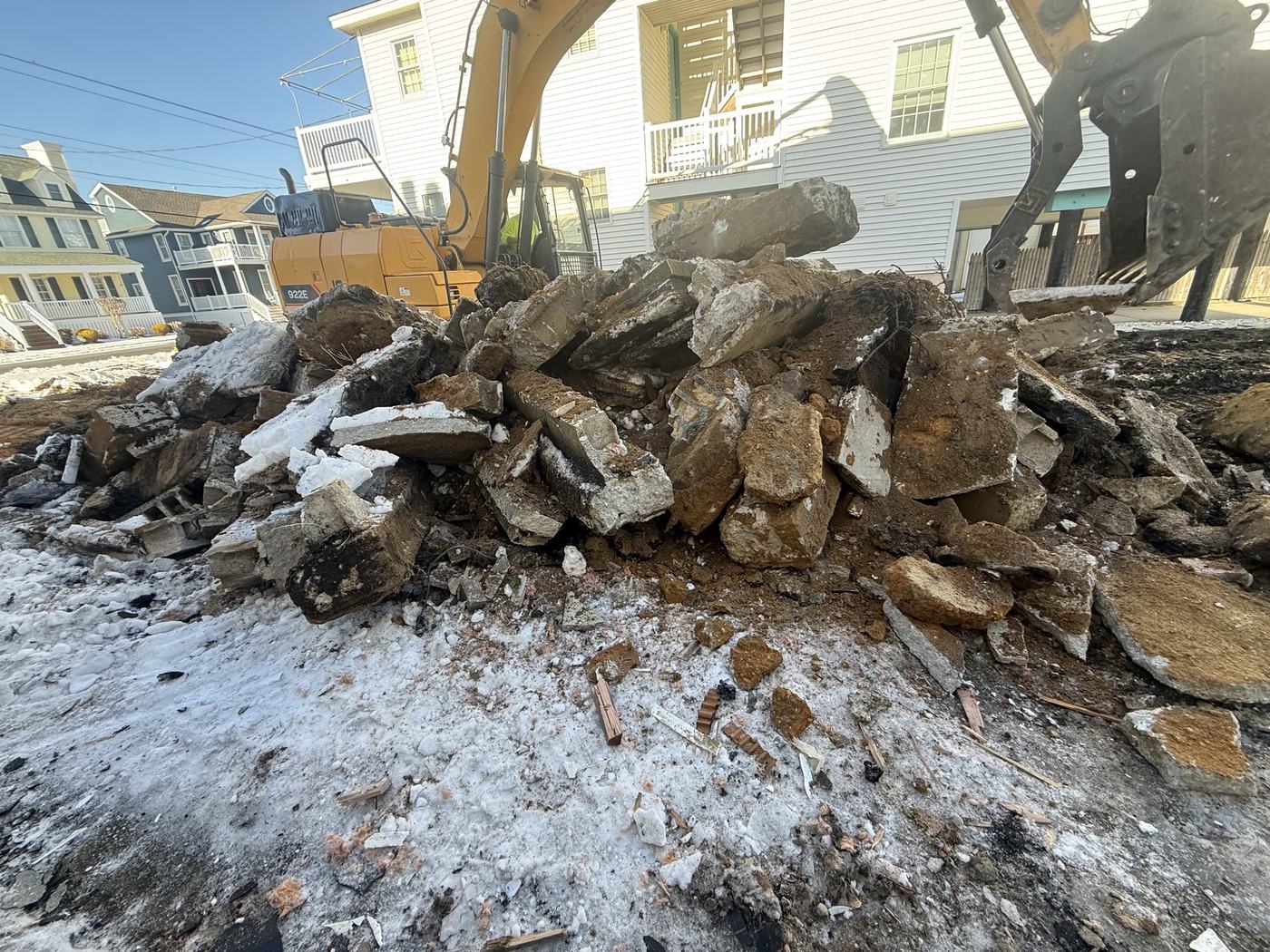
- The house was emptied before anything came down, and the job did not end at the debris. The foundation came out of the ground and the concrete left the lot.
- Teardowns run year round. Call (609) 290-3565 for a free estimate.
Empty It First
Before the machine started, the contents came out: furniture, mattresses, patio sets, everything the house still held. That is a real phase of the work, not a footnote. Mixing household contents into structural debris makes the pile heavier, the disposal more complicated, and the whole job more expensive than it needed to be.
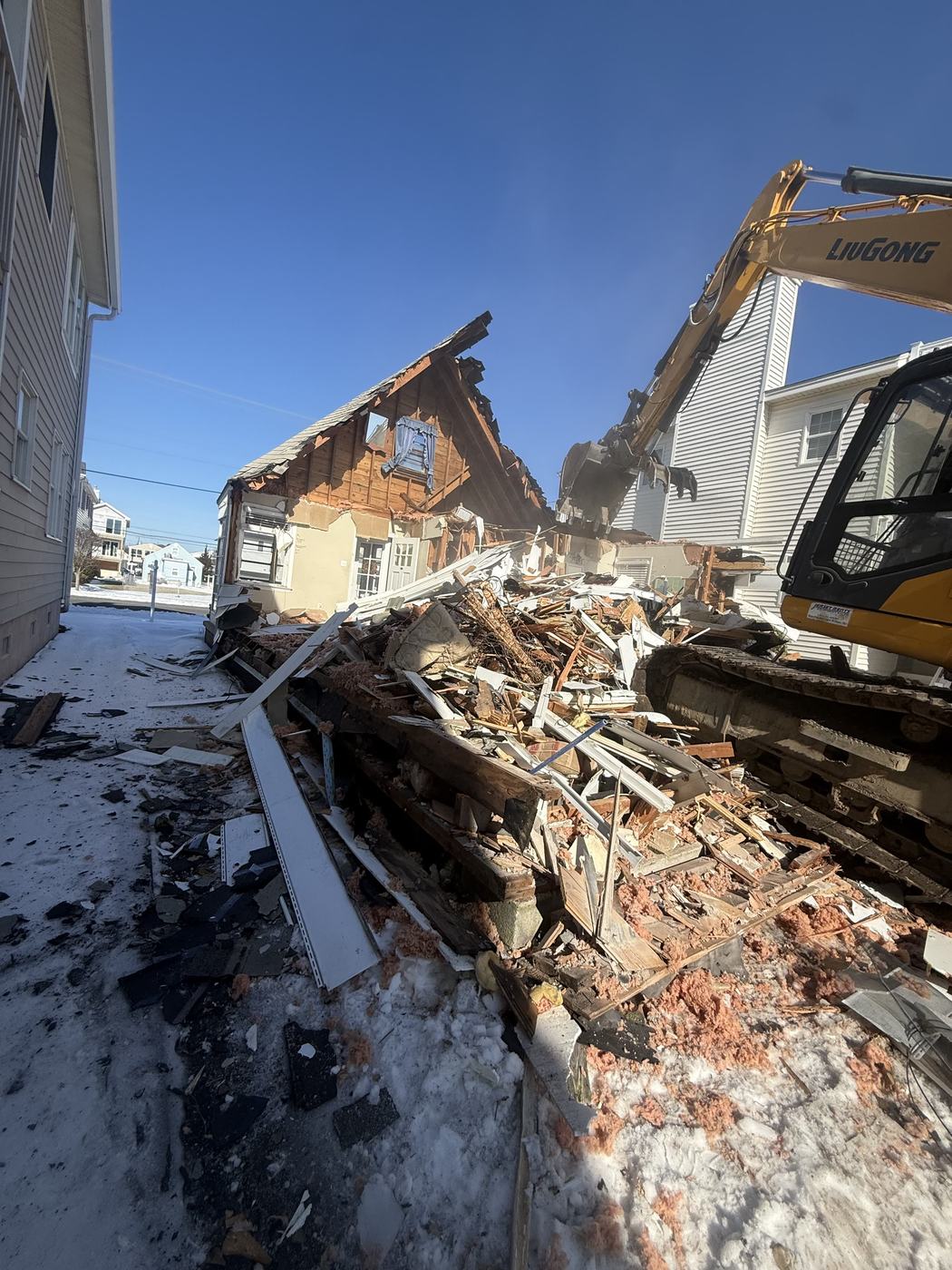
Pulling it first also means the demolition itself is predictable. What is left is framing, siding, roofing, and masonry, which is material the crew knows how to sort and load.
Cold Ground, Same Job
Winter does not stop a teardown, but it changes the day. Snow and frozen ground make footing worse for the machine, make debris heavier as it soaks, and make the site harder to keep tidy. The work still runs. It just gets planned around instead of wished away.
The structure came apart from the roof down, the same as any other teardown. What snow adds is a visible record of where the work stayed: the untouched white on either side of the lot is the property line the neighbors care about.
The Foundation Is The Real Work
Once the structure is loaded out, the part most people forget begins. The slab, footings, and foundation walls come out of the ground. Masonry and concrete get separated from the wood and hauled as their own stream, because they are heavy, they are disposed of differently, and mixing them costs money.
This is also where a teardown either sets up the next build or complicates it. A lot with the concrete pulled and the grade left clean is a lot a builder can start on. A lot with foundation still in the ground is a change order waiting to happen.